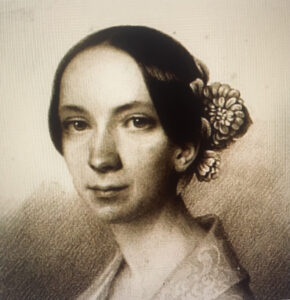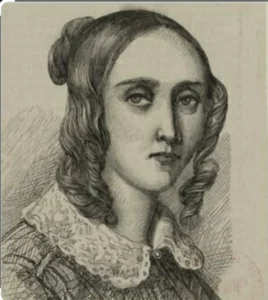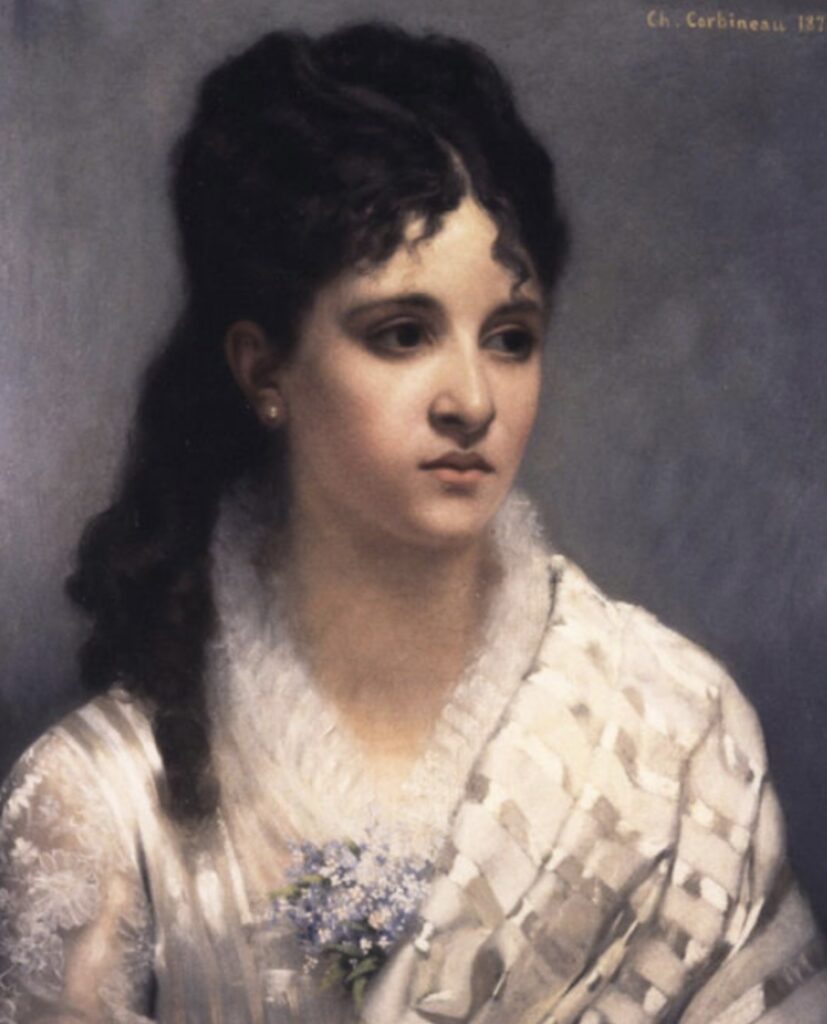
“I would like to be able to describe the state of mind that is at once so distressing, torturous, and delicious into which music plunges me – the music that I love.” – Melanie Bonis
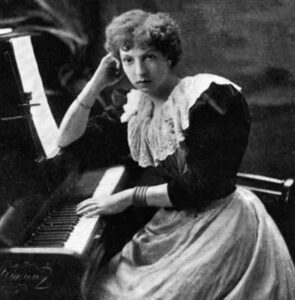
Born in 1858 into a strict Catholic, working class family in Paris, Mélanie Bonis was neither encouraged to play, nor educated in music as a child. She taught herself to play the piano, but was not allowed lessons until the age of twelve, when a family friend, Monsieur Maury, who taught cornet at the Paris Conservatory, recognized Melanie’s potential and convinced her parents to allow her private lessons in the home.
Four years later, she would be introduced to the composer Cesar Franck through Maury. Impressed with her compositions and musical aptitude, Franck encouraged Melanie’s parents to allow her to enroll at the Paris Conservatory, to which they reluctantly consented when Melanie turned eighteen. There, her classmates included Claude Debussy and Gabriel Pierné. Her professor, August Bazille, noted of her, “very talented, (a) good musician, beautiful ideas in harmony, sight reads orchestral scores well… I”m very satisfied with this student.”
Although she began to publish compositions under the abbreviated name Mel Bonis (to obscure her femininity), she was not allowed to submit to the coveted Prix de Romealongside her classmates, for women were not admitted to the competition until 1903.
At the Conservatory, Melanie met the voice student and poet Amédée Landély Hettich, and the two fell deeply in love. Her first published compositions were pieces for voice and piano set to his poetry. Her parents, however, rejected his marriage proposal and subsequently withdrew her from the Conservatory at the start of her final year, derailing her potential for a career in music.
Instead, she was forced into an arranged marriage with the twice-widowed Albert Domange, a man twenty-five years her senior with five sons, who had no interest in music. Although she climbed the social ladder through the marriage, gaining financial stability, Melanie had little time for composition throughout the following decade. Instead, she lived a conventional life helping to raise her step-sons and giving birth to three children of her own.
Still, Melanie stayed in touch with her conservatory professors and publishers, and in 1891, she submitted Les Gitanos (a Waltz) to a competition in the journal Piano Soleil, winning first prize and publication, and helping to inspire a return to music.
Also around this time, she would once again meet Hettich, and the two began to work together once more. A much-agonized over secret romance blossomed (due to her deeply religious leanings), resulting in a daughter, Madeleine, whose birth Melanie hid by taking a “cure” in Switzerland. Once born, she rejected the child as her own. Instead, she and Hettich served as their child’s godparents, and Madeleine was left in the care of one of Melanie’s former chamber maids.
After the birth of her illegitimate daughter, Melanie dove into a prolific and inspired period of composition. She entered competitions, again winning first prize in 1899 and honorable mention in 1904 for her harp compositions. She became a member of the Société des Compositeurs de Musique and served as its first woman secretary. Her pieces began to be performed and recognized at the most esteemed Paris music salons.
The First World War, however, brought new challenges, and Melanie’s creative production waned as she fell into depression. Her son, Edouard, became a prisoner of war, though he was later released. After her husband’s death in 1918, she adopted Madeleine into her home, but as a romance between the half-siblings, Madeleine and Edouard began to dawn, Melanie was forced to reveal the truth of Madeleine’s parentage, devastating her children while swearing them to secrecy.
Still devoutly Catholic and tormented by the illicit affair that had resulted in her daughter, Melanie withdrew from the world as she grew older. Her later compositions, consisting mostly of organ and choral works, reflected her deep spirituality, but her publishers were less interested in her works as the twentieth century musical world evolved, modernized, and changed.
Ultimately, Mel Bonis produced over 300 compositions, including solo piano and organ works, choral and chamber works, and orchestral pieces. Her music, profoundly unique, bridged the romantic, neoclassical, and impressionist eras. Yet the prejudices, limitations, and challenges faced by women composers of the nineteenth and twentieth centuries remained an undercurrent throughout her lifetime, and well beyond. Despite her accomplishments, much of her catalog of compositions remains unpublished and/or out of print today.
After hearing her string quartet in 1905, an astonished Camille Saint-Saëns commented, “I didn’t know a woman could write that. She knows all the ins and outs of being a composer!”
Noting the depth and extent of Melanie Bonis’s compositions, it is devastating to imagine what may have been her potential had she been allowed the opportunities, and encouraged in her creativity, as her male contemporaries had been. Still, despite the many setbacks that her life circumstances presented her, the catalogue of work by Mel Bonis is both astonishing and unique, and deserves to be published, performed, and heard.