“I do not believe that the few women who have achieved greatness in creative work are the exception…”
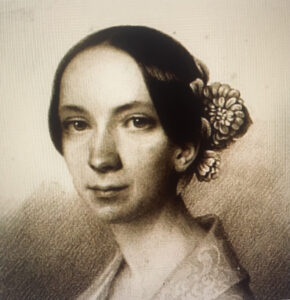
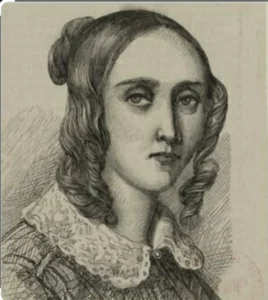
In the world of classical music, where composers such as Barbara Strozzi, who composed and published more pieces of secular music than any other composer (male or female) during the mid-1600’s, or Emilie Mayer, who premiered full symphonies that were programmed alongside Beethoven’s and supported herself through her compositions – history tries to tell us that Cecile Chaminade was the “first professional woman composer.”
Perhaps due to her undeniable, widespread popularity in the late nineteenth and early twentieth centuries, she is the first to be acknowledged as such, but as we’ve learned through the biographies of those featured in The Composer Project, if you look a little further, there were plenty of women composers throughout previous centuries, many of whom created recognized professions in music performance and composition and were celebrated in their own time, if not remembered by history.
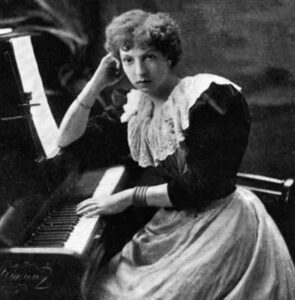
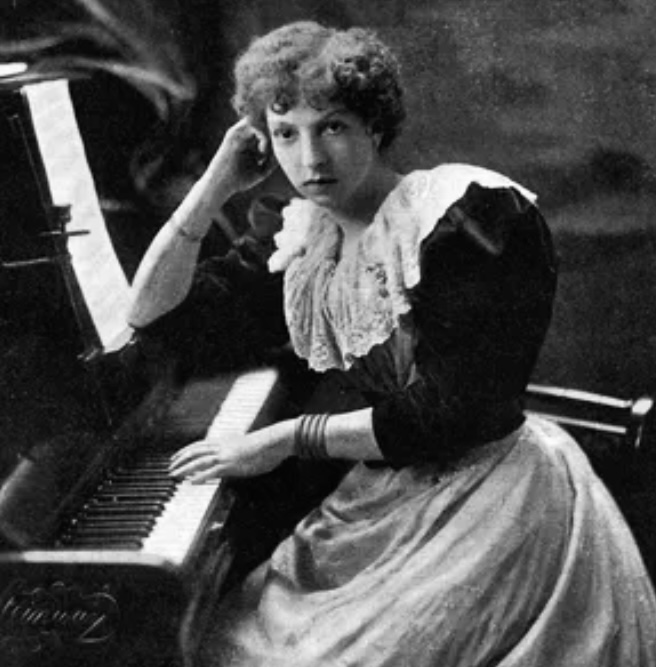
For Cecile Chaminade, a prolific composer, accomplished performer, and an astute businesswoman who reached great heights of success as both a composer and performer, the limitations of being a woman in the world of nineteenth and twentieth century classical music would nevertheless shape and influence her experiences throughout her lifetime.
Born in 1857 in a village outside of Paris into a musical family, her neighbor, Georges Bizet (the composer of the opera Carmen), was impressed with her musical abilities when she played him a song of her own composition at the age of eight, and encouraged her parents to send her to the Paris Conservatory. Her father, however, was adamantly against the idea. Instead, she was allowed to study music privately with some of the professors who taught at the conservatory, but she never received a full or formal conservatory education, nor had the opportunity to be in community with other leading musicians of the day.
When one considers how much creative development benefits from a dynamic network of other creative people and work, as in the case of the vibrant nineteenth-century musical salons that were frequented by most of the composers of the day, where they could play for each other and showcase their work (workshopping it in a way), it is astonishing how much Cecile Chaminade accomplished on her own.
Early on in her career she toured Central Europe, primarily programming her concerts with her own compositions, which was a bold move at the time. It was more common for composers to perform one or two of their own pieces while otherwise showcasing the expected classical repertoire of the day. Yet her concerts were sell-out events.
In 1892, Chaminade toured England for the first time. Queen Victoria herself became a fan, so much so that the Queen awarded Chaminade the Jubilee medal in 1897, and in 1901, her Prelude for Organ, Opus 78 would be played at the Queen’s funeral.
Chaminade’s music became extremely popular throughout Europe and beyond. Her pieces for piano and voice were melodic, catchy, and accessible to amateur musicians, making them appealing to others who played and taught piano, and Chaminade arranged for the sheet music to be published with eye-catching art nouveau covers.
Though she married her music publisher, Louis-Mathieu Carbonel in 1901, she and her husband lived in separate apartments and had more of a platonic relationship than a romance. In October of 1908, after the death of her husband, she finally agreed to the decades-long requests to tour in The United States. There, she performed to sold-out crowds in venues such as Carnegie Hall and the Academy of Music. Her popularity was so great in the United States that hundreds of musical societies formed by women and known as “Chaminade clubs” sprung up all over the nation. She was also one of the earliest artists to record gramophone and piano roll recordings of her songs.
Despite her commercial and creative success, the critics were hard on Chaminade. Her appearance was often noted as not being beautiful enough to please the eye, and her compositions for piano and voice were dismissed as “too feminine,” and considered to be merely “salon music,” which was to say that it was fine for women but didn’t open the doors to the boys’ clubs. Meanwhile, though she also wrote larger works, including piano trios, a choral orchestra, and concertos for piano and flute, her symphonic and chamber pieces were considered “too masculine” and “too virile” according to the reviews.
As the landscape of classical music began to change in the early twentieth century, becoming more experimental, the popularity of Chaminade’s music waned. Though she was awarded the Chevalier Legion of Honor prize in 1913 (the highest honor awarded in France), she faded from the musical world and died in 1944 in relative obscurity. Today, some of her larger chamber and orchestral works remain unpublished, either stored in archival libraries or lost to history.
“There is no sex in art. Genius is an independent quality. The woman of the future, with her broader outlook, her greater opportunities, will go far, I believe, in creative work of every description. ” -Cecile Chaminade