“One of the greatest artists who comes to mind in the past and present history of music.” – Hector Berlioz
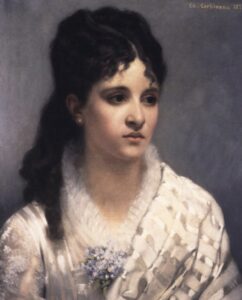
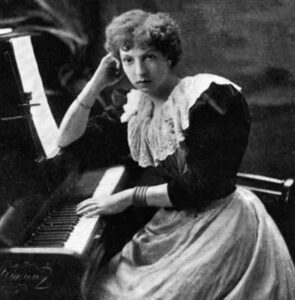
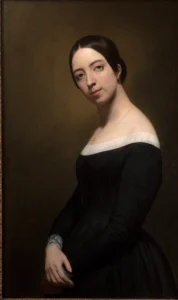
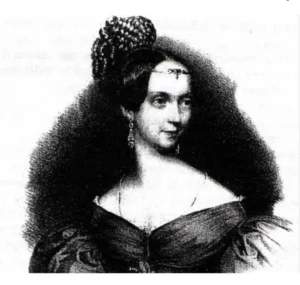
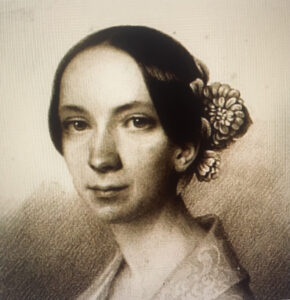
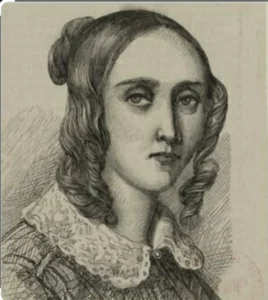
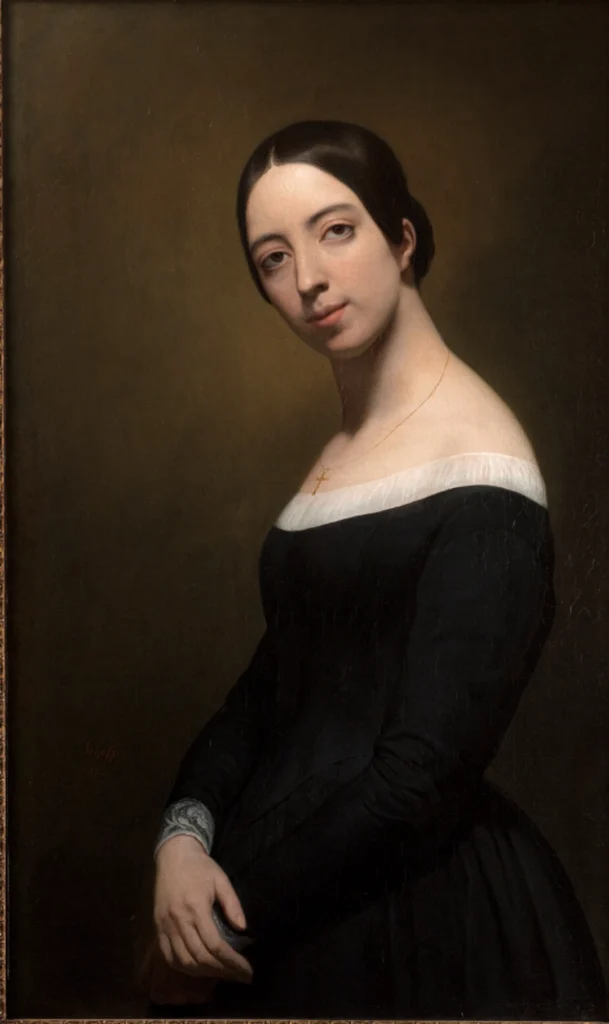
During much of the nineteenth century, Pauline Viardot was one of the more prominent names in classical music. Opera star, composer, teacher, pianist, scholar, actress; Pauline was steeped in the performing arts and her influence on the evolution and integration of European music and literature as a whole are perhaps unparalleled.
There is so much to write about Pauline that her story will come in installments throughout the month of July. Each post will take a deeper dive into facets of her life and work. She is the reason The Composer Project exists.
Michele Ferdinande Pauline Garcia was born in Paris, France on July 18, 1821, to Spanish parents and into a family that was already a musical phenomenon of their own. Her father, Manuel Garcia, was a renowned tenor for whom Rossini had written the part of Count Almaviva in his opera The Barber of Seville. Her mother Joaquina Sitches was an accomplished soprano, and her older sister, Maria Malibran was one of the most celebrated opera stars of her day. However, even Maria proclaimed that her little sister, Pauline, “would eclipse us all.”
As a child, Pauline studied piano with Franz Liszt and was praised for her proficiency on the instrument by her musical peers. However, despite aspirations to become a concert pianist, after the early and tragic deaths of both her father and sister, Pauline’s mother made the choice for her that she was to follow in the family tradition and become the world’s next opera star.
At the age of sixteen, Pauline Garcia made her debut as Desdemona in Rossini’s Otello. Although she lacked the physical beauty and allure of her older sister, her vocal range was exceptional, and she had a stage presence and artistry that captivated the audience like no other before her. When Queen Victoria attended a performance of Otello, she wrote that she was “delighted and astonished at Garcia’s Desdemona,” while Charles Dickens, who was frequently in Pauline’s audience, wrote of a later performance that it was “…a most extraordinary performance and full of quite sublime acting.”
The reviews sang her praises, drawing crowds to her performances and eliciting invitations to perform for royalty around the world. In Frazer’s magazine, a London Journal, it was written that “…Pauline’s technical skill alone is immense; in the completeness of chromatic scale, she is probably without a rival,” and that “…she throws herself heart and soul into a part.”
Pauline was admired and pursued by many of the world’s great artists, including the poet Alfred de Musset, from whom George Sand steered her away, encouraging Pauline to marry Louis Viardot instead, a man older than herself who willingly gave up his own career as a theater director to manage Pauline’s demanding schedule. They had four children together and enjoyed a long and seemingly comfortable yet unconventional marriage together.
In 1843 Pauline travelled to perform in Russia, where an audience member described hearing her voice for the first time. “Ravishing, velvet-like notes rang out, of the sort that no one, it seemed, had ever heard…Instantly an electric spark ran round the audience.” Even Tsar Nicholas I was observed cheering “like a madman.” Pauline Viardot was the first foreigner to sing flawlessly in the Russian language and she became a beloved artist there.
It was also in Russia that she first came to know the writer Turgenev, who fell deeply in love with her and would later follow her back to Paris, where he lived as her neighbor, sometimes housemate, and one of her closest friends for the remainder of his life.
In addition to the success of her operatic career, Pauline was also a prolific composer, penning hundreds of songs over her lifetime, including chamber music, six operettas, and many arias and librettos. As women were not encouraged to pursue composition at that time, Pauline would sometimes introduce her pieces as “unknown works by Mozart,” when performing them in her salon theater, and they would be received with great applause.
“When I want to do something, I do it in spite of water, fire, society and the whole world,” she once stated.
Pauline taught Chopin the nuances of Spanish music, edited works by Shubert, Hayden, and Brahms, complied and transcribed books of folk songs, set Pushkin’s and Goethe’s poems to music, and wrote books of vocal technique exercises, which are still used by aspiring singers today. To Pauline, music was a language to be shared.
Fluent in five languages, she was also an accomplished visual artist whose drawings and paintings were admired by Delacroix himself, and she became a greatly respected and sought-out vocal teacher in her later decades. She ushered in, promoted and championed the work of countless other musicians and literary artists, including Turgenev, Charles Gounod, Franz Liszt, Hector Berlioz, and Camille Saint-Saens.
Pauline’s influence on nineteenth-century music and the arts could be considered unparalleled, yet her musical artistry and legacy rarely receives the attention and acclaim that it deserves. It was Hector Berlioz who wrote that Pauline was “One of the greatest artists who comes to mind in the past and present history of music.”
Clara Schumann, Pauline’s close friend, a composer herself and the most celebrated concert pianist of her age (as well as the wife and musical partner of composer Robert Schumann) said that Pauline was “The most gifted woman I have known,” while Brahms said of her, “(she is) the most remarkable and superior woman and the greatest artist of the century.”