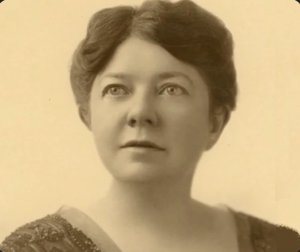
“The joy of giving of your highest powers is beyond description. When I play, there is only limitless enjoyment and enthusiasm.” -Amy Beach
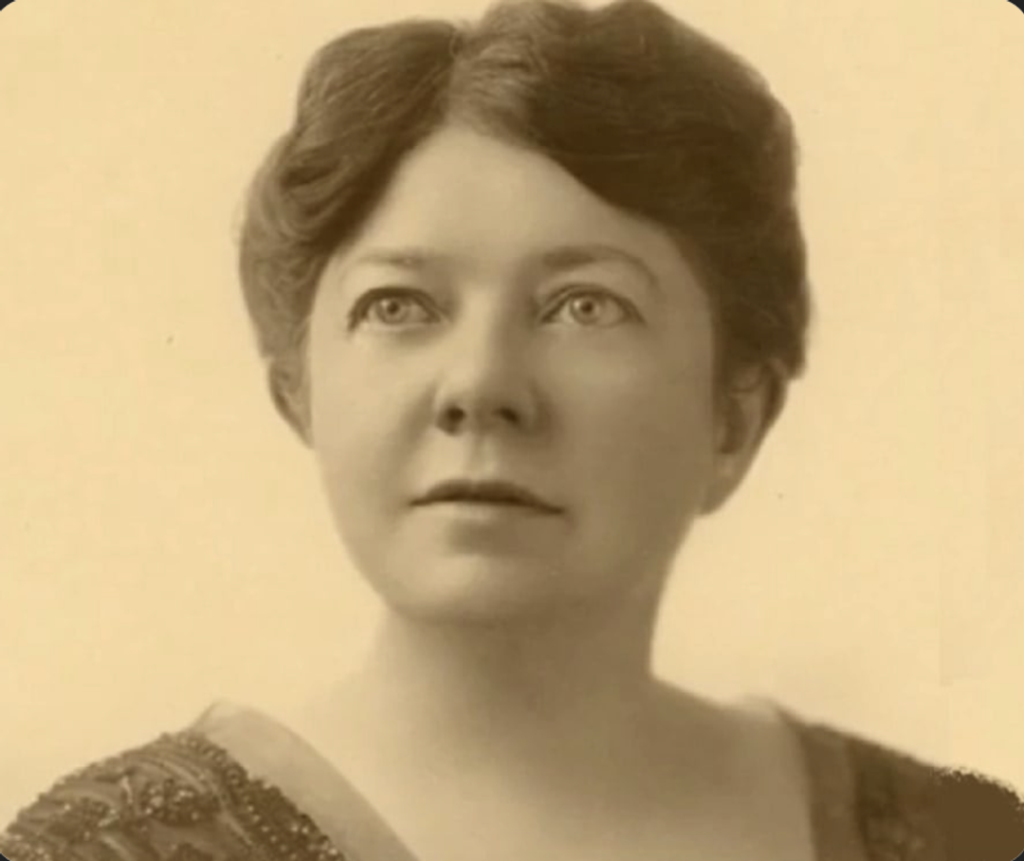
Amy Marcy Cheney was born on September 5, 1867 to a wealthy couple in New Hampshire who were members of the Calvinist church. Amy’s mother, a singer and pianist, first noticed her daughter’s aptitude for music when Amy was still a toddler, repeating melodies in perfect pitch and improvising parts to the songs she was sung at bedtime. At only four years old, she was already composing small pieces for the piano.
Both conservative and pious, Amy’s mother limited the child’s access to the piano, strictly managing how much she could play. Although she allowed her three piano lessons a week, she would use Amy’s sensitivity to music punitively, prohibiting her from playing if she had been disobedient, and playing sad songs in order to make her daughter, who was known to burst into tears at a melancholic tune, cry.
When Amy was seven years old, the family moved to Boston, where she began to perform in concerts, playing both her own compositions and pieces from the standard repertoire. Although they were urged to send her to Europe to study music, Amy’s parents forbade it. Rather than encouraging her education and potential for a career, they continued to limit her opportunities to perform, adhering to the conservative teachings of Calvinism and the belief that a woman performing for money was against the teachings of the Bible.
In Boston, Amy did have the opportunity to study piano with other teachers, including Carl Baermann, who had been a student of Franz Listz. At the age of fourteen, she was allowed to study music theory for one year. This was the only formal musical education she ever received. When it came to subjects such as counterpoint and composition, she relied entirely on self-training, which she did with extraordinary aptitude and dedication.
At the age of sixteen, Amy made her debut as a concert pianist, performing a series of piano concertos by Moscheles, Chopin, and Mendelssohn with the Boston Symphony, and New York Philharmonic, earning enthusiastic praise from critics. But at the age of eighteen, Amy married Dr. Henry Harris Aubrey Beach, a prominent Boston surgeon who was twenty-four years her senior, and her potential career came to an abrupt end. Also conservative-minded, Dr. Beach limited Amy to only one concert a year, and insisted that any money she earned from performing should be given to charity.
Yet Amy was given free rein to play and compose while at home, and because she was both financially secure and without children, she had ample opportunity to do so. Still, her husband would not acquiesce to composition lessons. Instead, Amy would embark on her own independent study of the great orchestral works, attending symphony concerts and seeking out texts on orchestration, even translating them when necessary. When they were accessible, she would bring the scores to concerts, studying them while listening attentively. At other times, she was known to write out the scores from memory once home, working out the different lines of instrumentation. In order to learn counterpoint, she wrote out Bach’s fugues and preludes from memory.
What Amy would accomplish in the following years was nothing short of astonishing. Without a formal musical education, Mrs. H.H.A. Beach, as she was then known, wrote a Mass for orchestra and chorus, as well as her Gaelic Symphony, Opus 32, the first symphony written by an American woman. The Symphony, given its name for its themes and melodies alluding to Irish folk songs, was first performed by the Boston Symphony on October 30th, 1896 to both public and critical acclaim.
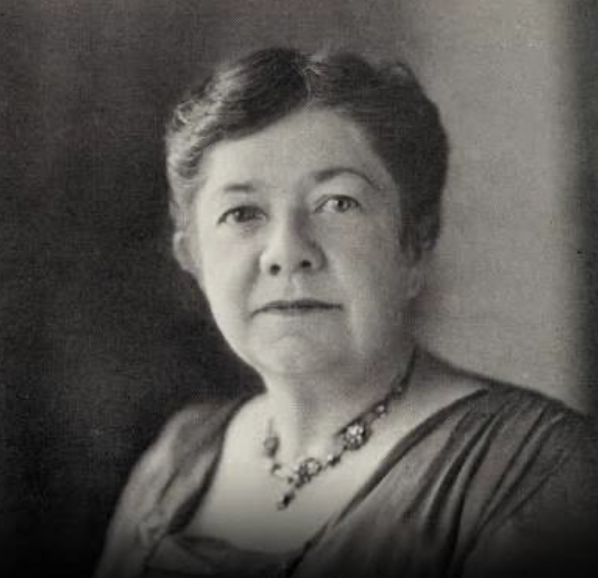
“It has happened more than once that a composition comes to me, ready made as it were, between the demands of other work.”
Not only was it essentially unheard of for a woman to compose symphonic works, women were generally not even allowed to participate in orchestras or play orchestral instruments in the early twentieth century. Yet Amy continued to compose symphonic works throughout the years of her marriage, including her Sonata for Violin and Piano, Opus 34, a Piano Concerto in C-sharp Minor, Opus 45, and her Quintet, Opus 67, for piano, two violins, viola, and cello.
In addition to her larger works, she also composed hundreds of songs for piano, violin, and voice in a variety of musical styles. Yet still a housewife and under the continued restraint of both her mother and husband, she was yet unable to fulfill her true vocation, which she always felt was as “a pianist first and foremost.”
In 1910, both Amy’s husband and mother passed away, and she could, for the first time, live life on her own terms. After a period of mourning in which she composed little, Amy finally embarked on a visit to Europe, spending time in Munich with an old friend, the opera singer Marcella Craft. But what was to be a visit of a few weeks turned into three years, during which she toured with the Berlin Philharmonic, performing her Piano Concerto in C# Minor. In Munich, she performed her Piano Quintet with the Munich Quartet under the direction of Richard Strauss, and later travelled to Rome, where she performed her Violin Sonata and Piano Trio.
The onset of World War One in 1914 forced Amy to cancel her European tour, and she returned for a period to Munich where she volunteered for the Red Cross. Returning to The United States later that year, she settled in New York City and continued performing as a concert pianist while also continuing to compose. Her music was by this time so popular that Amy Beach clubs sprung up all over the country, and piano teachers frequently taught her songs to their students.
In 1908, after the death of her friend, the composer Edward MacDowell, his wife Marian established the MacDowell Artist Colony, converting their home in New Hamshire into a retreat center for artists, writers, and composers, and between 1921 and 1941, Amy spent nearly every summer there. She continued to compose many additional works, including her enormously popular Canticle of the Sun, and her Piano Trio in A Minor, Opus 150 for violin, cello, and piano.
She helped found the Society of American Women Composers in 1924, acting as their first president. A prolific and acclaimed composer, her popularity faded after her death in 1944, her music went out of print, and until very recently, public performances of her symphonic and orchestral works disappeared. Today, there is renewed interest in the enormous body of work that Amy Beach left behind.