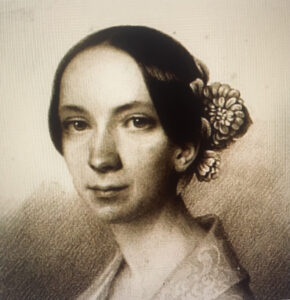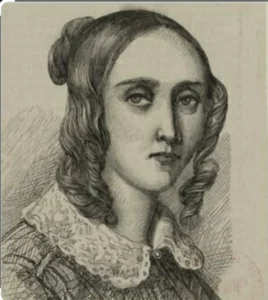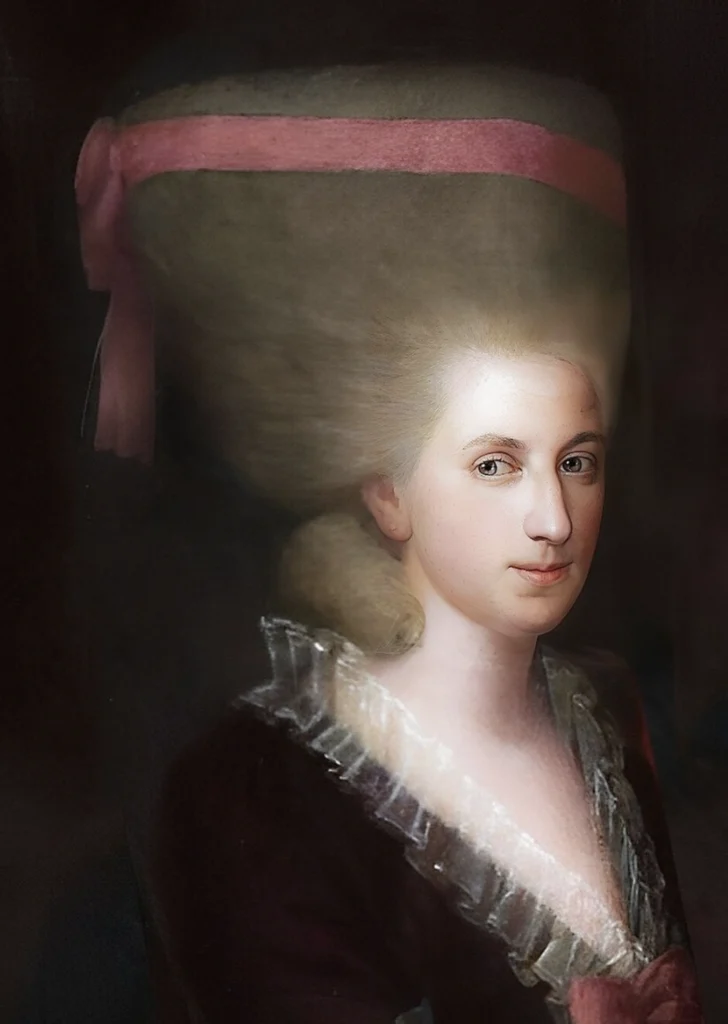
Everyone knows the name Wolfgang Amadeus Mozart. But few are familiar with his older sister Maria Anna (also known by her nickname Nannerl), whom the young virtuoso studied, performed, and toured with when they both were young.
Four years older than her precocious brother, Nannerl was an exceptional pianist whose reputation originally exceeded his own when the two children toured and performed together. At the ages of seven and eleven, the young virtuosos set off to travel with their father across Europe, performing in the highest courts throughout Germany, the Netherlands, France, Belgium, and England over a three- and half-year period.
As many creative efforts tend to be, their musical endeavors were collaborative. They were known for improvising at the piano when performing, and music was both their work and play. When their father, Leopold, fell ill while they were in London, the children were forbidden to make noise or to play the piano. To occupy themselves, they utilized the musical notebook their father had given to Maria Anna, spending the days crafting and transcribing together what became known as Mozart’s first symphony.
Written in Maria’s hand, there is much speculation (and in fact, historical records support this) that while the young Wolfgang dictated the melody of his first symphony, Nannerl may have been the one who actually orchestrated much of it. It has even been suggested by some scholars that the second movement, which was a more mature and thoughtful melody, may have been her own. What seems clear is that they wrote the piece together, and that to them, it was mostly a game and a way to pass the quiet days while their father convalesced.
When the children returned to their home in Salzburg at the ages of eleven and fifteen, Nannerl’s days of touring and performing ended abruptly, as no young lady was allowed to make a public spectacle of herself by performing. To do so in those times would be the social equivalent of being a prostitute. Men, of course, could go on to their careers, but a woman was expected to marry and run a household.
In fact, Maria Anna continued to play and compose on her own for some time, remaining at home with her parents into her early thirties. Wolfgang, however, continued to tour, and at the age of twenty-five moved to Vienna in an attempt to advance his career. The siblings remained close, but Maria Anna had to watch from home in Salzburg as her younger brother continued to live the life that she had been a part of for so long. The two corresponded regularly. At one point, in response to a composition that she had sent to him, Mozart wrote to his sister, “I am amazed to find how well you can compose. In a word, the song is beautiful. Do more of this.” The song itself, however, is long lost.
Today, nothing that Nannerl composed survives. What legacy she may have left behind had she been allowed to pursue a career, the scope of her compositions that at one time existed, and how much she influenced and collaborated with her younger brother on his early works all remain a mystery.
She eventually married a widow with five children and had three additional children of her own. Her life became what was expected by the social norms, though she eventually returned to playing, teaching, and composing music again later in life and after her husband’s death.
Still, as her father Leopold attested in a letter dated 1764, we know that like her renowned brother, she was an exceptional musician who also composed.
“My little girl plays the most difficult works which we have – with incredible precision and so excellently, what it all amounts to is this, that my little girl, although she is only twelve years old, is one of the most skillful players in Europe.”