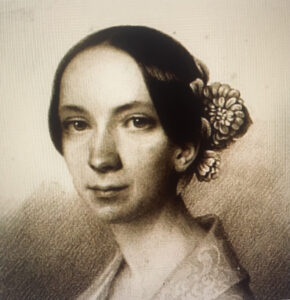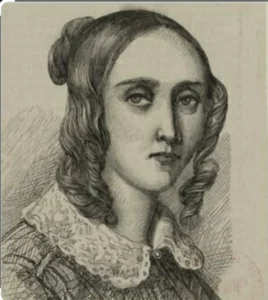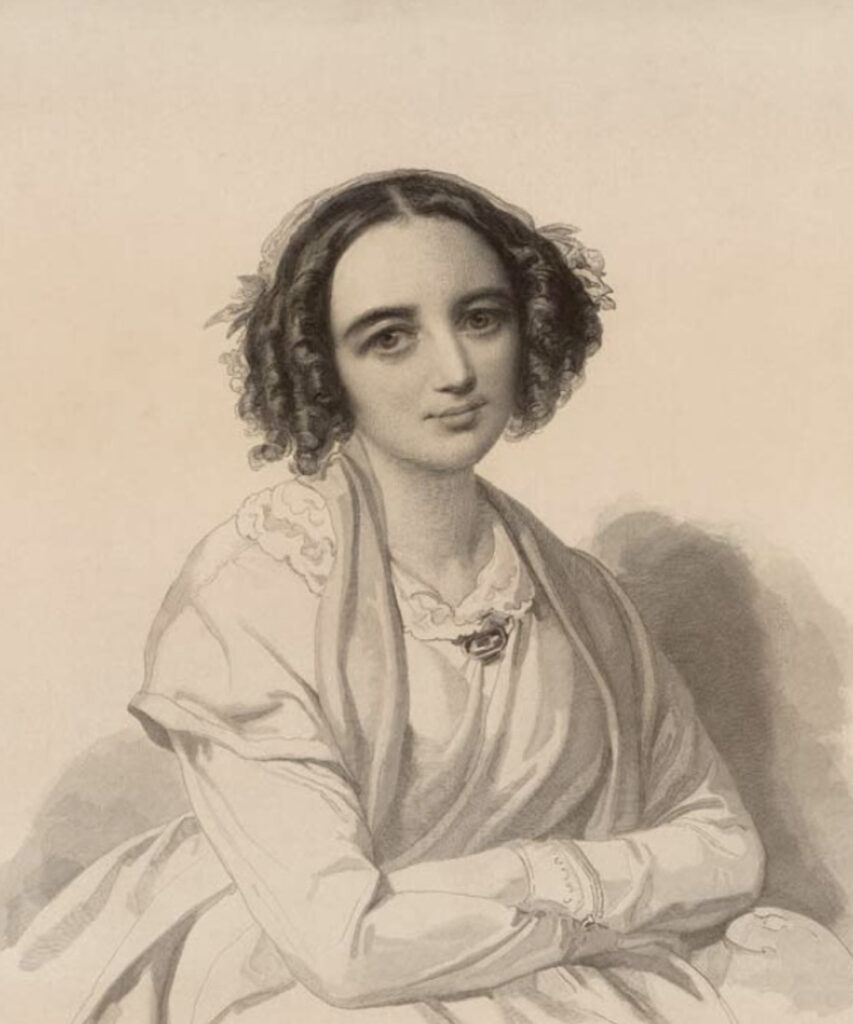
Of all the composers introduced and explored in The Composer Project over the course of this year and beyond, Fanny Mendelssohn Hensel is without contest one who should be recognized alongside the greats, a household name like her brother Felix.
Musically innovative and a prolific composer (she produced nearly 500 pieces ranging from solo piano to orchestral works) the story behind why Fanny Hensel is rarely known outside of scholarly classical music circles includes the willful suppression of her music and name by the men closest to her in life (her father and brother), as well as, remarkably, those entrusted with her compositions up through the late twentieth century.
Though she had the support of her husband, the artist William Hensel, who encouraged her compositions, musical soirees, and creativity, her father and later her brother Felix forbade her from publishing her compositions or seeking a musical career of any kind. Felix, however, published several of her pieces under his own name (with her permission as it was not acceptable for her to do so herself) and claimed credit for them until he admitted to Queen Victoria in 1842 that her favorite composition by him (Italien) had actually been written by his sister, Fanny.
As recently as 2010, another larger work The Easter Sonata, which had been lost for 150 years and credited to Felix after its discovery in 1970, was found and verified to have actually been written by Fanny. Signed F. Mendelssohn, the initial mistake is understandable.
Perhaps more frustrating and deplorable than her own family’s discouragement, which due to the position of women during the times (the 1800’s) may be more comprehensible, the role of Dr. Rudolf Elvers, who was the director of the West Berlin State Library’s Mendelssohn Archive from 1965 to 1988, is less acceptable. Claiming that “She was nothing. She was just a wife,” Elvers discouraged and even prohibited the exploration and discovery of her work by both scholars and the public. Even now in the twenty-first century, when Fanny’s music is finally being published and shared with the world, it is difficult to get past the chauvinism that entrenches the world of classical music, where only about five to seven percent of the compositions performed by orchestras worldwide are written by women composers.
During Women’s History Month (the month of March) I am excited to share the remarkable works and life of Fanny Mendelssohn Hensel with you. For now, here is a link to her composition March from the song cycle Das Jahr.