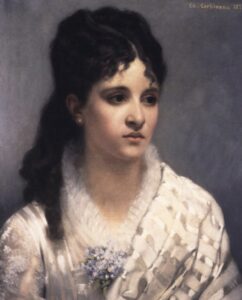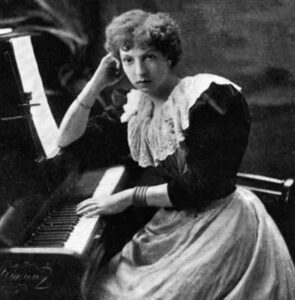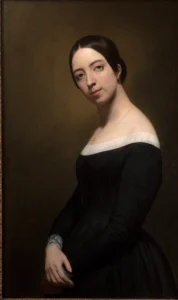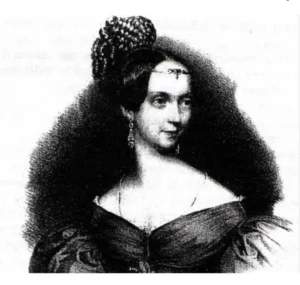
Prior to the twentieth century, there were few opportunities for women musicians and composers to share musical experiences with others. Although they could attend public concerts in some circumstances, they could seldomly participate, their seating was limited and confined to less optimal areas of the theater, and even then, attending concerts was only for the well to do. Rarely could a woman pursue a career as a musician.
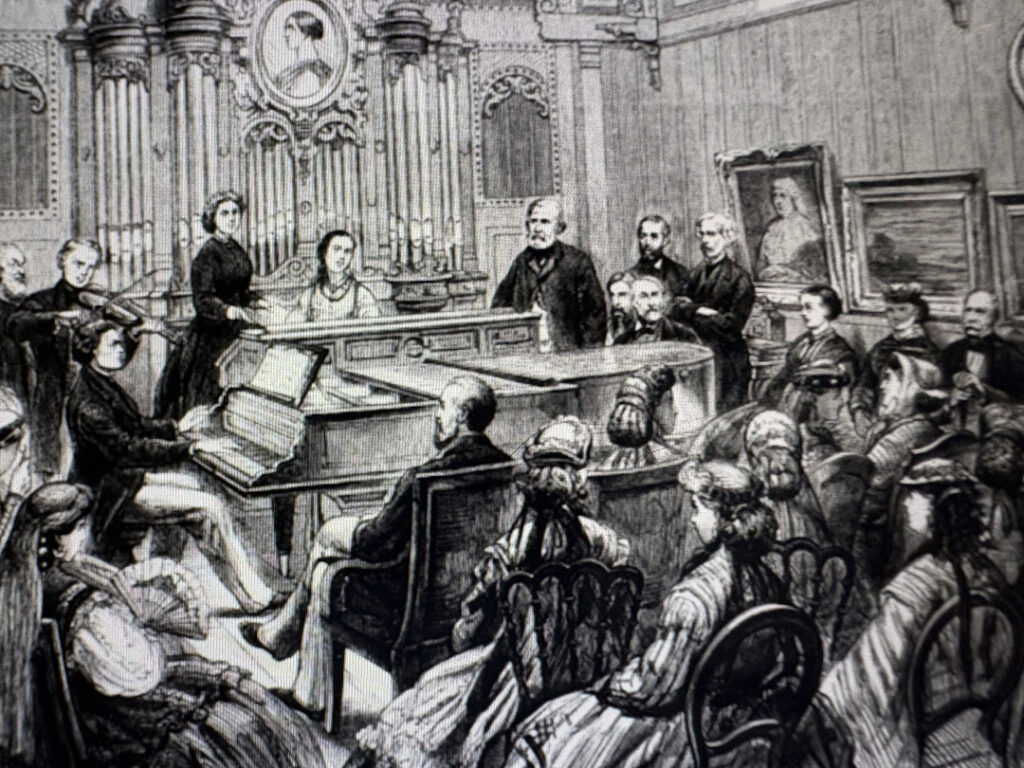
For those who had the means, hosting a musical salon was the exception to these limitations and allowed for the world of music and performance to be brought into one’s own home. As became the fashion, the artistic and intellectual elites would gather regularly to share compositions, literature and poetry, and intellectual conversation in the homes of some of the eighteenth and nineteenth centuries most renowned artists. In some cases, royalty might attend. Most importantly, a lady could perform in this intimate setting without consequence.
From as early as the 17th century the idea of intimate salon concerts gained popularity in aristocratic circles in central Europe, growing into a fashionable cultural phenomenon in 18th and 19th century France, particularly in Paris. The intimate setting allowed for artists to share shorter works, which encouraged the development of solo instrumental music for the piano, and piano and voice.
It was also an opportunity for artists to learn from each other, collaborate, debut compositions, and network with the local artistic community. Salons became the preferred venue for many artists, including Chopin, Liszt, the Mendelssohns, the Schumanns, and Berlioz. Among their company would be such figures as Goethe, Charles Dickens, George Sand, Turgenov, and the painters Delacroix and Morissette, making for an unparalleled meeting of great artists and minds.
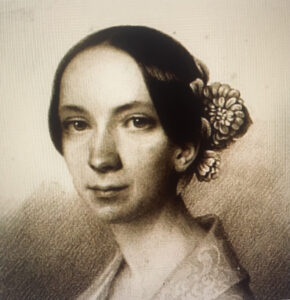
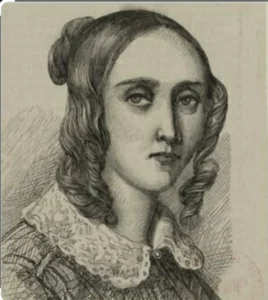
It was here that some of the artists in The Composer Project found the opportunity to share their works regularly with others. Without the salon concerts, their immense talents would have been restricted to only themselves and their families. The salon concerts also served as a bridge to those few women who did flourish in a larger career, including this month’s featured composer, Maria Szymanowska.
You can hear one of her compositions here: