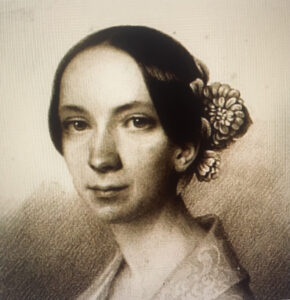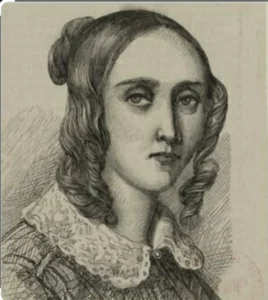
A collaborative friendship
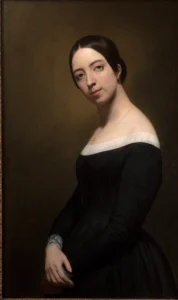
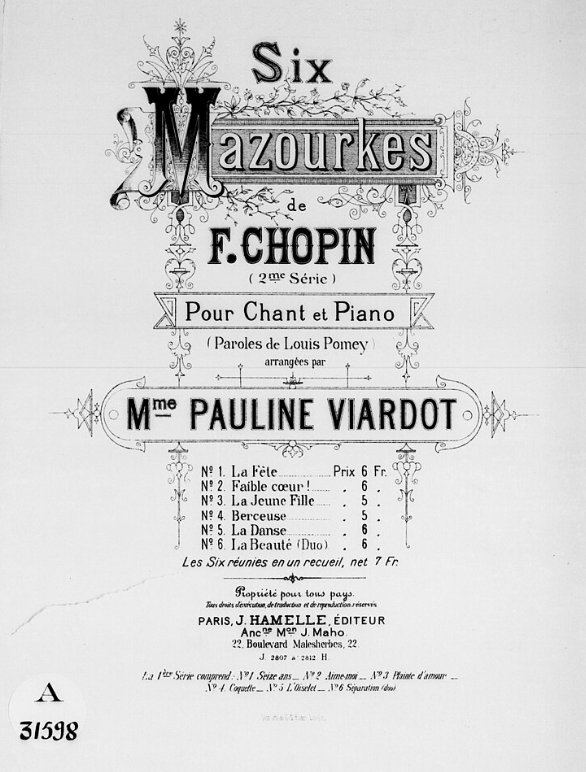
As the story goes, it was during a dinner party at Nohant, George’s Sand’s country home and a frequent getaway destination for Pauline in the 1840’s, that Chopin first dared her to arrange one of his Mazurkas for voice and piano after she declared that she could transcribe any piano piece for voice. In response to his invitation, she arranged twelve of them, setting them to poems written by the painter Louis Pomey, who was also a frequent guest at Nohant and likely in attendance at the time.
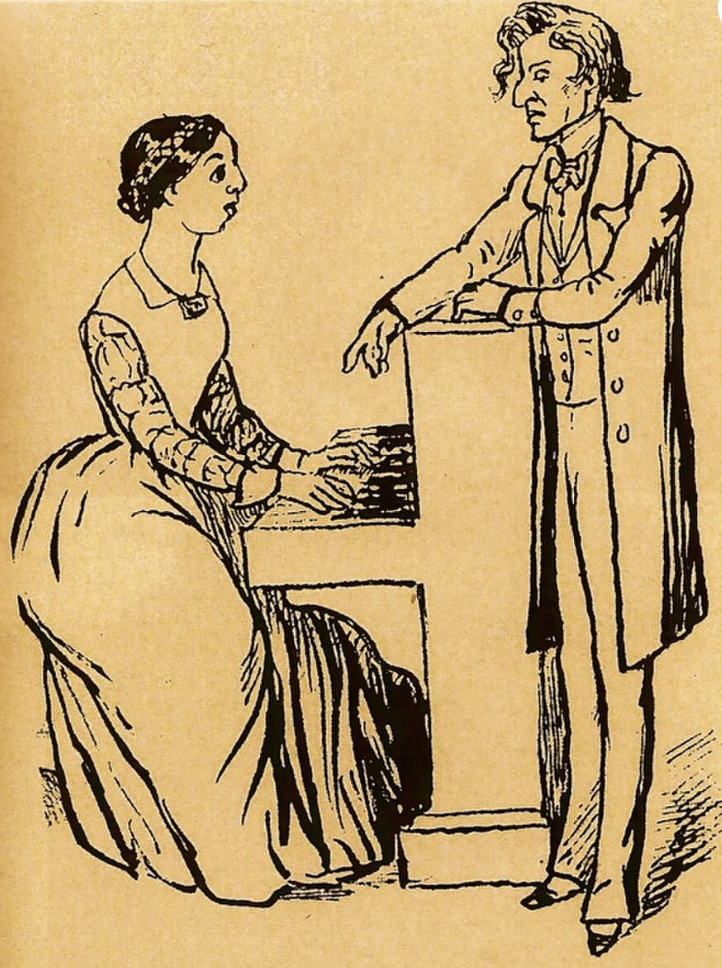
Pauline’s arrangement of the Mazurkas included ornamentations of the original melodies and the addition of cadenzas, which she composed herself, resulting in a a unique new cycle of work. Chopin and Viardot would perform her transcription of the Mazurkas for piano and voice in Paris and at salon concerts on numerous occasions. Pauline would also perform them while on tour in other locations, accompanied by artists such as her former teacher, Franz Liszt.
The two artists influenced each other in ways musical, personal, and political, sharing a close circle of friends at Nohant that included painters, poets, and musicians. Chopin was introduced to Spanish folk music through Pauline, and she would learn to sing some of his pieces in their original Polish language.
Although Chopin was conservative in his outlook, he was a political exile, and through him Pauline would meet other Polish refugees, such as the poet Mickiewicz. Pauline and her husband Louis were politically liberal and often found themselves in the company of exiles, which influenced their world view. They themselves would come to abandon their home in Baden-Baden years later due to the Franco-Prussian war, fleeing initially to London and later returning to Paris.
After George Sand and Chopin parted ways, Viardot wrote to her friend George, attempting to reconcile them, but was unsuccessful. Their parting grieved her, but instead of taking sides, she remained close friends with both parties.
Viardot and Chopin would play from the Mazurkas again at Chopin’s final public performance in London in 1848. The following year, Pauline would participate as a soloist in Mozart’s Requiem at Chopin’s funeral in Paris.